
Things to do in Yongchun
Explore top experiences
Top 10 attractions in Yongchun

Baizhangyan Sceneic Area
Yongchun · 11.7 km from downtown


Quanzhou Kaiyuan Temple
Kaiyuan Temple is located in QuanzhouWest Street, Licheng DistrictBuilt in the second year of the Chuigong era during the reign of Empress Wu Zetian of the Tang Dynasty, it has a history of over 1,300 years. It is an important cultural relic along the southeastern coast of China and one of the larger-scale Buddhist temples in Fujian Province. The attractions of the monastery are arranged along the central axisWorship pavilion, the Baiting, the main hall of Kaiyuan Temple, the Sangpeng historic site, the Kaiyuan Temple's Sweet Dew Ordination Platform, the scripture depository, etc.Also,, as well as the stone pagodas on the east and west sides and the east and west corridors. Quanzhou Kaiyuan Temple - The heavenly king hall, also the mountain gate of the temple, was built in 1925. The stone pillars are slightly thinner at the top and bottom, thicker in the middle, shaped like a shuttle, reflecting the Tang dynasty stone pillar style. A wooden couplet hangs on the stone pillars, reading "This place is called the land of Buddha, where every street is filled with saints." It was composed by Zhu Xi, a great Neo-Confucian scholar of the Southern Song dynasty, and written by the modern eminent monk Hongyi. Crossing the mountain gate brings you toWorship pavilionStanding here, you can see the east and west pagodas rising from the ground and the spacious, bright east and west corridors symmetrically arranged on both sides. The east and west pagodas are among the more famous attractions in the area. The east pagoda is called "Zhenguo Pagoda (East Pagoda)," while the west pagoda is named "Renshou Pagoda." Standing over 40 m tall, they are one of the tallest pairs of stone pagodas in China and serve as landmarks and symbols of the ancient city of Quanzhou. Worship pavilionIn front, there is a large stone courtyard where officials and commoners from ancient and modern times gather for activities, becoming particularly lively during events. On both sides of the stone courtyard stand eight large banyan trees, beneath which are arranged 11 ancient sutra pillars and small stupas from the Tang, Song, and Ming dynasties in various styles, as well as two stone tortoises. Then there is the main structure, the Mahavira Hall of Kaiyuan Temple. The Mahavira Hall of Kaiyuan Temple also has an elegant name, "Hundred-Pillar Hall." Originally, the hall was planned to have one hundred pillars, but later, to accommodate the placement of Buddha statues and create space for Buddhist activities, the beams were extended, and the number of pillars was reduced, resulting in the "Hundred-Pillar Hall" with 86 pillars.Quanzhou · 54 km from Yongchun

South Shaolin Temple
First built during the Longshuo era and abandoned in the Tianyou era. According to Cai Yongjian's "Xishan magazine" from the Qing Dynasty, which cited the Tang Dynasty's "Minzhong records," before the first year of Longshuo in the Tang Dynasty (661 AD), "Zhikong entered Minzhong and built the Shaolin Temple at the foot of Qingyuan Mountain, consisting of thirteen courtyards." "The Shaolin Temple had thirteen sections, surrounded by walls three zhang high, with vast fields and lush forests." "Beside the celestial altar stood the Shaolin Temple, where Zen master Zhikong met with Governor Wang at the celestial altar." Zhikong (styled Daoguang) was one of the thirteen staff-wielding monks from the Songshan Shaolin Temple renowned for saving the Tang emperor. His arrival in Min marked the beginning of martial monks in Fujian, and he trained twelve disciples—some capable of capturing tigers or lifting massive cauldrons, others skilled in wielding heavy crossbows, mastering chain hammers, or moving with extraordinary speed... The "Minzhong records" also states: In the first year of the Tang Tianyou era (907), "the Shaolin Temple rebelled against Wang Shenzhi's allegiance to the Liang Dynasty and was destroyed." Shi Mengshuo of the Southern Song Dynasty wrote in his "Donglu poetry collection": "The Shaolin Temple was built in Qingyuan, with ten grand gates and towering walls; a hundred acres of fields across three ridges, where a thousand monks practiced martial arts to rebel against the Wang regime." The "Wang regime" refers to the Min King Wang Shenzhi. Wang Shenzhi's destruction of the South Shaolin Temple in Quanzhou marks its first destruction. Prospered during the Taiping Xingguo era and declined during the Zhiyuan era The "Xishan magazine" records that in the sixth year of the Taiping Xingguo era of the Northern Song Dynasty (981 AD), an imperial decree was issued to rebuild the South Shaolin Temple in Quanzhou. This marked the second revival of the South Shaolin Temple in Quanzhou. Liu Changyan of the Northern Song Dynasty wrote in his poem: "The legacy of Qingyuan was built during the Xingguo era, the Shaolin spirit pervades throughout southern Quanzhou." "Xingguo" refers to the reign era of Emperor Taizong of Song, Taiping Xingguo (976–983). A copy of the Zhang family genealogy preserved in Donghu village, Dongqiao town, Hui'an county, states: "Shizhi, styled Fayi, renowned for stone carving, his craftsmanship was unparalleled, such as the stone lions in front of the Shaolin Temple in Quanzhou..." Zhang Shizhi was the younger brother of Zhang Shixun, a figure from the Song Dynasty, indicating his involvement in carving the stone lions at the entrance of the Shaolin Temple in Quanzhou during the Song Dynasty. Northern Song Dynasty records document that the South Shaolin Temple originally comprised a mountain gate, Mahavira Hall, dharma hall, Bodhidharma ancestral hall, thirteen halls, arhat hall, xuannü hall, scripture repository, heavenly king hall, Guanyin hall, Ksitigarbha hall and other supporting facilities, covering 400 mu of land. During the 2002 reconstruction of the heavenly king hall, over 40 stone temple components were excavated underground, including 1 pagoda base, 1 pagoda cover, 7 finials resembling those of Yinggeng Pagoda at Chengtian Temple, 4 stone caps, 4 column bases, 6 stone pillars, and notably 20 intact mortise stones measuring 1 m in diameter - all testifying to the temple's grand architectural scale. Numerous roof tiles and covers were also unearthed. Experts speculate these components likely belonged to the Quanzhou South Shaolin Temple's structures during the Tang and Song dynasties. During the peak periods of the Tang and Song dynasties, the temple housed thousands of martial monks. The "Xishan magazine · general records" also records: "In the first year of the Song Jingyan era (Yuan Dynasty's Zhiyuan 13th year, 1276), a thousand monks from the Qingyuan Shaolin Temple rebelled against Pu Shougeng's surrender to the Yuan Dynasty. The abbot of the Shaolin Temple, Yuan Miao... commonly known as Zhao Mengliang... (Yuan troops) pursued them to the Shaolin Temple... The vanguard, Qi Wotunsi, known for his cruelty, ordered an assault on the Shaolin Temple, provoking the fury of the thousand monks. Amidst the clash of swords, each monk fought like ten, leaving Yuan soldiers' corpses strewn across the east of Qingyuan city, with bones littering the fields. When Suodu arrived, he ordered arrows to be shot, killing most of the thousand monks, with only a hundred surviving... The survivors fled to Dehua (Daiyun Temple)." This marks the second destruction of the South Shaolin Temple in Quanzhou. In the mid-Ming dynasty, Li Sen (born in 1398), a wealthy philanthropist from Anxi, funded the purchase of large tracts of wasteland on Dongyue Mountain to establish charitable burial grounds for the free interment of remains by Quanzhou residents. These burial sites appear to have been the same wastelands where the Shaolin Temple was destroyed after its thousand monks resisted the Yuan dynasty in the late Southern Song period. Prospered during the Hongwu era and declined during the Qianlong era The "Xishan magazine" records: In the tenth year of the Hongwu era of the Ming Dynasty (1377 AD), Faben of the Xuanmiao Temple (a Shaolin monk who fled to Dehua after the resistance of a thousand monks against the Yuan Dynasty in the late Song period, aged 135) persuaded the local official Huang Zhongli to "petition the court for imperial approval to rebuild the Shaolin Temple." The monks then spread martial arts throughout southern Quanzhou. This marked the third revival of the South Shaolin Temple in Quanzhou. The Annals of Jinjiang County, Volume 69, from the Daoguang era of the Qing Dynasty records: "The South Shaolin Temple is located by the East Lake outside Renfeng... It was rebuilt in the 10th year of the Xuande era (1435) during the Ming Dynasty, but later fell into disrepair. Monks restored one-tenth of its original site and also enshrined County Magistrate Peng Guoguang, as Peng had helped monks reclaim temple lands." In the book "Records of Shaolin warrior monks" by master Deqian of the Shaolin Temple on Mount Song (published by Beijing Sports University Press, 1988), it is stated: "According to the 'Internal Chronicles of Shaolin Temple,' monk Yuanran possessed extraordinary martial arts skills and was commended by Emperor Jiajing of the Ming Dynasty (reigned 1522-1566). His eminent disciple, master Yuekong, was ordered to lead over 30 warrior monks who had proven their skills to Quanzhou, Fujian, to suppress Japanese pirates and establish merits. There, they built the South Shaolin Temple, where he became the abbot." This confirms that the "Internal Chronicles of Shaolin Temple" from the northern Shaolin Temple clearly records the existence of a South Shaolin Temple in Quanzhou during the Ming Dynasty, while the claim of it being newly built is a misconception. To this day, southern Fujian still circulates stories of northern Shaolin warrior monks suppressing Japanese pirates. During the Qianlong era of the Qing Dynasty, Emperor Qianlong toured southern China and feared that the warrior monks of the South Shaolin Temple might collude with the remnants of Zheng Chenggong (see "Quanzhou biographical records: Zheng Chenggong"). "In the fall of the 28th year of Qianlong's reign (1763), an imperial decree ordered the burning of the Shaolin Temple... From then on, no one dared to rebuild it." Some temple monks took refuge at Yipian Temple in Nan'an. This marks the third destruction of the South Shaolin Temple in Quanzhou. After the burning of Shaolin Temple, the monk Zhishan sought refuge among the people, continuing to recruit Shaolin disciples to oppose the Qing dynasty and restore the Ming. Zhishan, Hong Xiguan, and their disciples spread to Guangdong, further developing Southern Shaolin boxing, which produced the Southern Shaolin boxing champion Wong Fei-hung. Later, Wong Fei-hung's disciples brought the art to Hong Kong and spread it as far as the United States.Quanzhou · 55.1 km from Yongchun

Wuyishan National Park
Wuyishan National Park is located in the northern section of the Wuyishan mountain range in northwestern Fujian, stretching across the border area between Fujian and Jiangxi provinces. It is one of China's first established national parks, and Wuyishan itself was inscribed as a UNESCO World Heritage Site for both culture and nature as early as 1999. The park was formed by integrating the former Wuyishan National Nature Reserve and Wuyishan Scenic Area: the Tongmu area in the north focuses on ecological conservation and scientific research, preserving a rare intact mid-subtropical forest ecosystem at this latitude. The main peak of the Wuyishan range, Mount Huanggang, is also located here, and this core area does not offer regular tourism activities. Sightseeing activities are concentrated in the scenic areas along both banks of the Nine-bend Stream, namely the four major sections: Tianyou Peak to Taoyuan Cave, Nine-bend Stream to Wuyi Palace, One-line Sky to Tiger Roaring Rock, and Dahongpao to Water Curtain Cave. The attractions in the scenic area are relatively scattered with considerable distance between them. A leisurely visit typically requires two to three days. If you only have one day, start by ascending Tianyou Peak for a panoramic view of the emerald waters and crimson mountains along the Nine-bend Stream, then take a bamboo raft downstream from Xingcun Wharf. Along the way, you'll pass landmarks like Jade Maiden Peak, Great King Peak, cliff inscriptions, and suspended boat coffins. The rafting journey ends at Wuyi Palace, making it an ideal classic route. Tea enthusiasts may prefer spending time on the leisurely Rock Bone Floral Trail between Dahongpao and Water Curtain Cave. This gentle path connects core Wuyi rock tea production areas like Liuxiangjian and Huiyuankeng, offering a uniquely fragrant experience. With two days, you can cover all four major sections. For more time, consider visiting the ancient tea merchants' residences in Xiamei Village, the starting point of the ancient Tea Horse Road, or exploring the ruins of the Minyue King's City near Chengcun Village—the latter also being part of Wuyishan's world heritage site. Bamboo rafting is very popular, so please make arrangements in advance during peak season. To get close to the ecological heart of the park, you can take the Wuyishan National Park No. 1 scenic route. Places like Moon Bay and Qinglong Waterfall are suitable for self-drive or private charter. As for food, street snacks like flat meat dumplings and Vietnamese noodles are common, while Langu smoked goose and local dishes cooked with alpine bamboo shoots and mushrooms are also worth trying.China · Wuyishan

Pingtan Island
Pingtan Island, also known as Haitan Island, is located in Pingtan County, Fuzhou. As China's fifth largest island, it's often shrouded in mist from the east, earning it the nickname "Eastern Mist." The island boasts a winding coastline stretching over 400 km with pristine sandy beaches. Notable attractions include Thirty-Six Feet Lake, Shipaiyang Reef, Immortal Well, Yipianwa, and the Keqiutou Site. Leisure facilities like Longfengtou Resort and Tannanwan Beach make it an ideal coastal getaway. Pingtan Island boasts three stunning beaches—Changjiang'ao to the north, Haitan Bay to the east, and Tannan Bay to the south—featuring powdery white sand and crystal-clear azure waters. These interconnected shores are backed by lush windbreak forests and dotted with picturesque islets and rock formations, creating an exceptionally scenic coastal landscape.China · Pingtan County

Quanzhou Ancient City
Quanzhou Ancient City Scenic Area is a special tourist scenic area integrating coastal scenery, historical relics, folk customs and sculpture art. It has always been called "natural studio" and "Southern Beidaihe". Chongwu Ancient City is a relatively complete stone city left in my country. It is also a relatively complete historical site in the history of my country's coastal defense and a "National Key Cultural Relics Protection Unit".Quanzhou · 54.6 km from Yongchun

West Street
West Street is a relatively early developed street and area in Quanzhou. As early as the Song Dynasty, it has symbolized the prosperity of Quanzhou. It is also a well-preserved ancient block in the urban area of Quanzhou, retaining a large number of buildings with original historical appearance. For more than a thousand years, this ancient block has been like a string of dazzling pearl chains, connecting many colorful cultural relics and ancient residential buildings in Quanzhou since the Tang and Song Dynasties, as well as the famous anecdotes and folklore attached to them. In addition to Kaiyuan Temple, East-West Pagoda, Chengxin Pagoda, celebrity residences, and modern western-style buildings, there are also a large number of unique ancient houses and antique wooden buildings. It is a living architectural museum, which contains both the ancient city The rich historical and cultural accumulation also tells the century-old vicissitudes of the ancient city. Liao's house, No. 35, Wuta Lane, has two rooms and five rooms and is well preserved. There are corridors on both sides of the beech heads, and the wooden windows are in a circular structure, which is quite characteristic; Yan Zhai No. 58 Huitong Lane has three rooms and three bays, with brick carvings on the eaves walls, patios and three rooms with double beech trees. , The front hall is built with bricks and stones, and there are flower-leather windows on both sides of the brick walls, which are well preserved.Quanzhou · 53.9 km from Yongchun

Three Lanes And Seven Alleys
"Three Lanes and Seven Alleys" is located in the heart of Fuzhou, collectively referring to ten historic lanes and alleys lining both sides of Nanhou Street from north to south. The "three lanes" are: Shuixie Stage, Wenru Lane, and Guanglu Lane. The "seven alleys" are: Yangqiao Alley, Langguan Alley, Anmin Alley, Huang Alley, Ta Alley, Gong Alley, and Jibi Alley. "Who would have thought the recluse of Five Willows and Lone Pine would dwell amidst Three Lanes and Seven Alleys?" This entire ancient residential quarter, first built during the Ming Dynasty, has been remarkably preserved through centuries of history spanning both Ming and Qing dynasties. The neighborhood houses former residences of numerous historical figures and even features a folk culture museum. As the saying goes, to understand a city, you don't need to traverse every street—just stroll down one historic lane at a leisurely pace. Walking through Three Lanes And Seven Alleys brings you closer to the heart of Fuzhou.China · Fuzhou

Dehua Ceramics Museum
Dehua County Ceramics Museum is located in Tangzhaishan Forest Park, Xunzhong Town, Dehua County, Quanzhou City, Fujian Province. It is a professional ceramics museum with relatively complete information in Fujian Province. It is also an important window for Dehua County to promote ceramic culture, display exquisite ceramic craftsmanship and a long history of ceramics.Dehua · 20.9 km from Yongchun

Nan'ao Island
Nan'ao Island is an island county located on the border between Guangdong Province and Fujian Province. Nan'ao Island has not been opened up extensively. The scenery still retains its original natural beauty. The sea water is clear and the sand quality is superior. In addition to the natural landscape, the island contains historical sites such as the Nan'ao Zongbingfu and the Song well. This place has many kinds of seafood, which is tasty and inexpensive. So this is a great place to eat seafood while watching the sea.China · Nan'ao County
Experiences you can't miss in Yongchun
Featured Day tours in Yongchun
View all Day tours

4.6/5
· 44 reviews· 364 bookedFree cancellation
Instant confirmation
Book now for tomorrow
289 travelers saved
From฿ 3,994.81
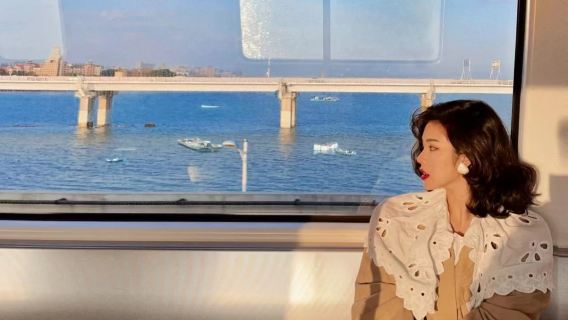
Xiamen Island Ring Road + Jimei University Village + Sea Train + Shapowei + Nanputuo Temple Day Trip
4.7/5
· 32 reviews· 218 bookedFree cancellation
Instant confirmation
Book now for today
90.6% of travelers recommend
From฿ 5,439.73
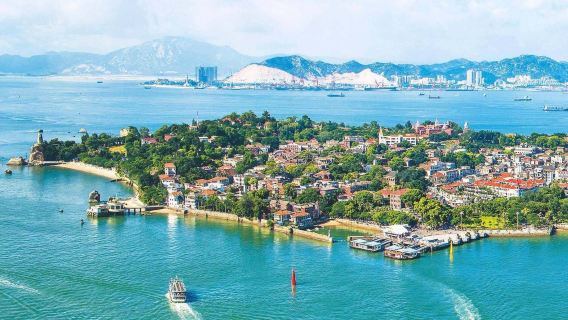
5.0/5
· 2 reviews· 74 bookedFree cancellation
Instant confirmation
Save ฿ 5.58
From฿ 553.22฿ 558.8
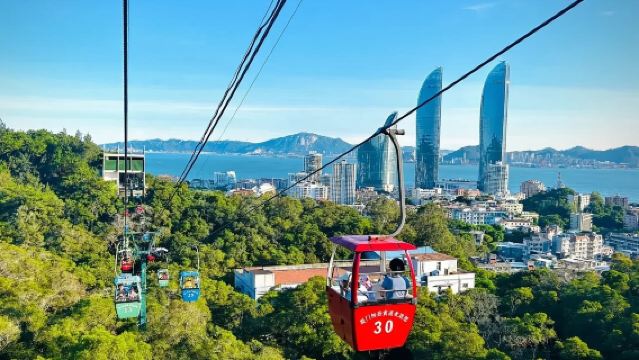
4.9/5
· 292 reviews· 1.6k bookedFree cancellation
Instant confirmation
Book now for tomorrow
83 consecutive positive reviews
From฿ 3,939.81
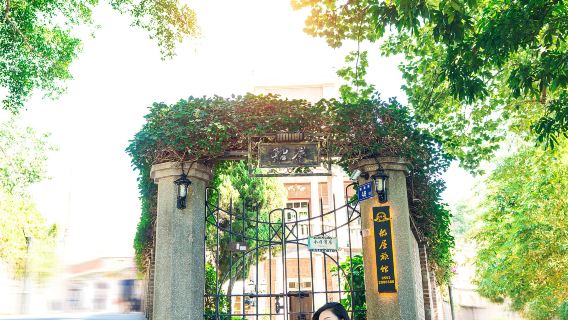
4.9/5
· 29 reviews· 119 bookedFree cancellation
Instant confirmation
Book now for tomorrow
29 consecutive positive reviews
From฿ 4,439.78
4.3/5
· 9 reviews· 47 bookedFree cancellation
Instant confirmation
Save ฿ 14.12
From฿ 1,397.58฿ 1,411.7
5.0/5
· 1 review· 21 bookedFree cancellation
Instant confirmation
Book now for tomorrow
Save ฿ 61.49
From฿ 1,168.45฿ 1,229.94
4.0/5
· 1 review· 25 bookedFree cancellation
Instant confirmation
Save ฿ 23.41
From฿ 2,317.65฿ 2,341.06
Featured Food & drink in Yongchun
View all Food & drink
5.0/5
· 3 reviews· 64 bookedFree cancellation
Instant confirmation
Book now for tomorrow
Save ฿ 8.45
From฿ 835.96฿ 844.41
Free cancellation
Instant confirmation
Book now for tomorrow
From฿ 2,774.87
Instant confirmation
Book now for today
From฿ 2,494.88
![Kulangsu private tour 1-day tour [Shuzhuang Garden + VIP afternoon tea in Republic of China style + 1-hour travel photo shoot]](https://ak-d.tripcdn.com/images//0581z12000nkcf1y1F6E5_C_568_320.jpg?_fr=wc)
5.0/5
· 11 reviews· 33 bookedFree cancellation
Instant confirmation
Book now for tomorrow
From฿ 7,924.61

Free cancellation
Instant confirmation
Book now for tomorrow
From฿ 9,999.51
Free cancellation
Instant confirmation
Book now for tomorrow
Save ฿ 12.45
From฿ 1,231.94฿ 1,244.39
5.0/5
· 9 reviews· 192 bookedFree cancellation
Book now for tomorrow
From฿ 699.97
Free cancellation
Instant confirmation
From฿ 6,499.68
Featured Spa & wellness in Yongchun
View all Spa & wellness![[Spa + buffet] Xiamen Huangjia Water Resort: Massage + spa + star-rated buffet](https://ak-d.tripcdn.com/images/0355b12000t0bl2xbD5BC_C_568_320.png?_fr=wc)
4.5/5
· 2 reviewsFree cancellation
Instant confirmation
Book now for tomorrow
Save ฿ 12.67
From฿ 1,253.94฿ 1,266.61
![[Foot therapy + buffet] Xiamen Shoujia health club: Foot massage + star-rated buffet](https://ak-d.tripcdn.com/images/0350u12000s7wtp589EB6_C_568_320.jpg?_fr=wc)
5.0/5
· 1 reviewFree cancellation
Instant confirmation
Book now for tomorrow
Save ฿ 21.56
From฿ 2,133.89฿ 2,155.45
Free cancellation
Instant confirmation
Book now for tomorrow
Save ฿ 6.89
From฿ 681.97฿ 688.86

Free cancellation
Book now for tomorrow
Save ฿ 15.11
From฿ 1,496.58฿ 1,511.69
![[Hot spring getaway] Xiamen Shengzhixiang hot spring resort: A leisure experience of nature and hot springs](https://ak-d.tripcdn.com/images/0356a12000syzqvua4095_C_568_320.jpg?_fr=wc)
Free cancellation
Instant confirmation
Book now for tomorrow
Save ฿ 9
Limited-time sale
From฿ 890.96฿ 899.96

Instant confirmation
Book now for tomorrow
Save ฿ 13.89
From฿ 1,374.93฿ 1,388.82
![[Hot spring getaway] Xiamen JinSuiYuan hot spring | Outdoor bath wellness experience](https://ak-d.tripcdn.com/images/0353012000sz1yxm8BEBA_C_568_320.jpg?_fr=wc)
Free cancellation
Instant confirmation
Book now for tomorrow
Save ฿ 5.89
From฿ 582.97฿ 588.86
![Xiamen Shengzhixiang hot spring resort half-day tour | Top choice for leisure trips [Private car + tickets]](https://ak-d.tripcdn.com/images/0350312000syzr2645176_C_568_320.jpg?_fr=wc)
Free cancellation
Instant confirmation
Book now for tomorrow
Save ฿ 18.12
From฿ 1,793.56฿ 1,811.68
Featured Cultural experiences in Yongchun
View all Cultural experiences
4.5/5
· 4 reviews· 50 bookedFree cancellation
Instant confirmation
Book now for tomorrow
From฿ 1,193.13

Free cancellation
Instant confirmation
Book now for tomorrow
From฿ 624.97
From฿ 200.00
![Xiamen Gulangyu Island Private Half-Day Tour[Flexible Departure + Hustle-Free!]](https://ak-d.tripcdn.com/images/0355512000snu64dc11A4_C_568_320.jpg?_fr=wc)
Free cancellation
Instant confirmation
Book now for tomorrow
Save ฿ 19.17
From฿ 1,898.39฿ 1,917.56
Free cancellation
Book now for today
From฿ 639.97

Save ฿ 19.99
From฿ 1,979.92฿ 1,999.91
Free things to do in Yongchun
Baizhangyan Sceneic Area
Yongchun · 11.7 km from downtownQuanzhou Kaiyuan Temple
Quanzhou · 54 km from YongchunSouth Shaolin Temple
Quanzhou · 55.1 km from YongchunWuyishan National Park
China · WuyishanBook now for tomorrow, Cancel anytimePingtan Island
China · Pingtan CountyQuanzhou Ancient City
Quanzhou · 54.6 km from YongchunWest Street
Quanzhou · 53.9 km from YongchunThree Lanes And Seven Alleys
China · FuzhouDehua Ceramics Museum
Dehua · 20.9 km from YongchunNan'ao Island
China · Nan'ao County
What travelers say about Yongchun

Youneau 熔莹天下April 28, 2025
5.0
Baizhangyan is a holy place of Taoist culture. The Fairy Mother is really very spiritual. Believers bow down and pray to the Fairy Mother with sincerity, and she will give very clear instructions.
Baizhangyan Sceneic Area

菁菁 者莪July 23, 2026
5.0
Kaiyuan Temple, a thousand-year-old temple, boasts imposing twin pagodas and towering banyan trees, offering a tranquil escape from the bustling city. Just a wall away lies West Street, a vibrant hub of activity, with its exquisitely carved ancient buildings that blend the diverse cultures of the Maritime Silk Road, making it a worthwhile destination to savor and appreciate the rich heritage of Quanzhou.
Quanzhou Kaiyuan Temple

300***34October 7, 2026
5.0
The performance, priced at around seventy yuan, was well worth it. The Shaolin monks all gave their all, and the applause was constant throughout the performance. This was not only an affirmation of their performance but also a praise and expression of confidence in the spirit of traditional Chinese martial arts. There was especially a cute little monk, about four or five years old, who could even make a hand gesture, eliciting constant laughter.
South Shaolin Temple

沈墨凡October 13, 2026
5.0
There's no excessive commercialization, and the bamboo raft boatmen are quite interesting and don't charge extra. A special shout-out to the "One Line Sky"! Having climbed countless "One Line Skys" across the country, only this one is truly authentic!! A place where you can calmly focus on the scenery, a truly peaceful and beautiful landscape.
Wuyishan National Park

吃一朵玫瑰花叭~~September 19, 2026
5.0
The 68-nautical-mile scenic area is well worth a visit. It's the closest point between mainland China and Taiwan. Be careful not to cross the yellow lines marked in the scenic area, as it can be dangerous. The staff are very responsible and will blow whistles to warn you if you cross the yellow lines. It's a great place for taking photos, and it's not too hot to walk around in the scenic area right now.
Pingtan Island

一直在路上的猫March 31, 2026
4.0
Quanzhou Ancient City.
Quanzhou is a place with a profound cultural heritage, reaching its peak during the Song and Yuan dynasties. It was the "largest port in the East" and the starting point of the "Maritime Silk Road." Designated one of the first batch of National Historical and Cultural Cities in 1982, and in 2021, "Quanzhou: A World Maritime Trade Center of Song and Yuan China" was inscribed on the World Heritage List, with eight World Heritage sites within the ancient city. The core urban area covers approximately 6.41 square kilometers, and the city's outline resembles a carp.
The most central areas of the ancient city include: West Street (a thousand-year-old street), Kaiyuan Temple + East and West Pagodas, the Bell Tower, the arcade buildings along Zhongshan Road, Qingjing Mosque, the Confucian Temple, and the Tonghuai Guanyue Temple. Religious diversity coexists here, earning it the title of "World Religious Museum."
Here, you can find traditional Minnan red-brick houses, Western-style buildings, and arcade buildings coexisting; intangible cultural heritage such as Nanyin music, Liyuan opera, and puppet shows are vibrant; Minnan delicacies such as tusu jelly, rice noodle soup, and runbing are abundant; the night view is dazzling, making it an excellent place for a walking tour.
Don't bother eating at the food stalls on the pedestrian street; most of them are popular tourist spots, the taste is average, and they don't really represent the quality of Quanzhou snacks.
Quanzhou Ancient City

Anonymous userJuly 8, 2026
5.0
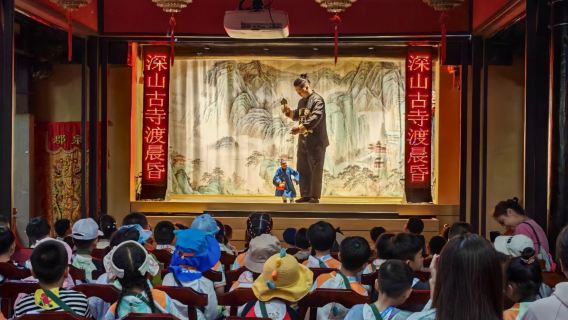
As invited teachers, several of my colleagues and I accompanied parents and children to the puppet theater on the third floor of Kaiyuan Shengshi, witnessing firsthand the vibrant power of traditional craftsmanship during this one-hour performance. Four plays were presented in quick succession: "Little Bald Head Goes Down the Mountain" conveyed the message of diligence and growth through a story from an old Quanzhou street; "Daming Mansion" showcased loyalty and responsibility through acrobatic combat; "Fighting the Tiger" gripped the audience with its portrayal of Wu Song's bravery; and the grand finale, "Monkey Play Training the Monkey," with its ingenious "turning fruit into gold" and play-within-a-play concept, drew gasps of amazement from the teachers and students. The puppets, guided by silken strings, moved with lifelike agility, displaying remarkable skill as they twirled in the hands of the children. The children watched intently, their eyes glued to the screen, applause and laughter filling the theater.
The essence of this study tour lay in bringing intangible cultural heritage from the books into reality. The children not only witnessed exquisite performances but also had the opportunity to personally manipulate the strings and hold the puppets in their hands during the post-performance experience, truly feeling the focus and perseverance behind "one minute on stage." Quanzhou string puppets and hand puppets are both listed as UNESCO Intangible Cultural Heritage. These are not forgotten relics, but rather a testament to the life passed down through generations of artisans. When children see the puppet monkey mimicking an artist controlling a clown, the intricate layers of craftsmanship allow them to intuitively understand the difficulty and joy of this heritage. This one-hour experience is not just a captivating performance, but a genuine dialogue with a thousand-year-old craft—approaching tradition with laughter and planting seeds of identification through hands-on experience. This is the most basic yet profound value of study tours.
West Street

数羊小狗October 9, 2026
5.0
When visiting Fuzhou, a leisurely stroll through the Three Lanes and Seven Alleys is a must. Walking on the cool cobblestone streets, looking up at the staggered saddle-shaped walls, white walls and gray tiles, you'll see the quintessential old Fuzhou.
No need to rush to see the must-see spots; just wander into any alley, and you'll find ancient houses and courtyards brimming with stories. The streets are bustling with the aroma of everyday life—meat dumplings, fish balls, and peanut soup fill the air—a truly blissful experience as you stroll and savor the delicious treats.
Three Lanes And Seven Alleys

你真是个可爱的家伙August 9, 2019
5.0
There are lots of porcelains, it is worthy of being the porcelain capital. There are also hot springs♨️ to soak in, and there is also a Jiuxian Mountain, which freezes in winter. And the reason why I have a special liking for Dehua is that my boyfriend is from Dehua,
Dehua Ceramics Museum

stanwzgAugust 6, 2026
4.0
We didn't catch any squid, but the owner helped us by casting a net every half hour, bringing up quite a few. We had a barbecue on the boat, which was a nice way to relax and have some fun in the evening. Even though we didn't catch any fish, we still had a barbecue and seafood porridge dinner.
Nan'ao Island


